
Your Spine Has Twenty-Four Joints. You Use It Like a Hinge.
By OnlyGainsTV Studios · Jul 21, 2026
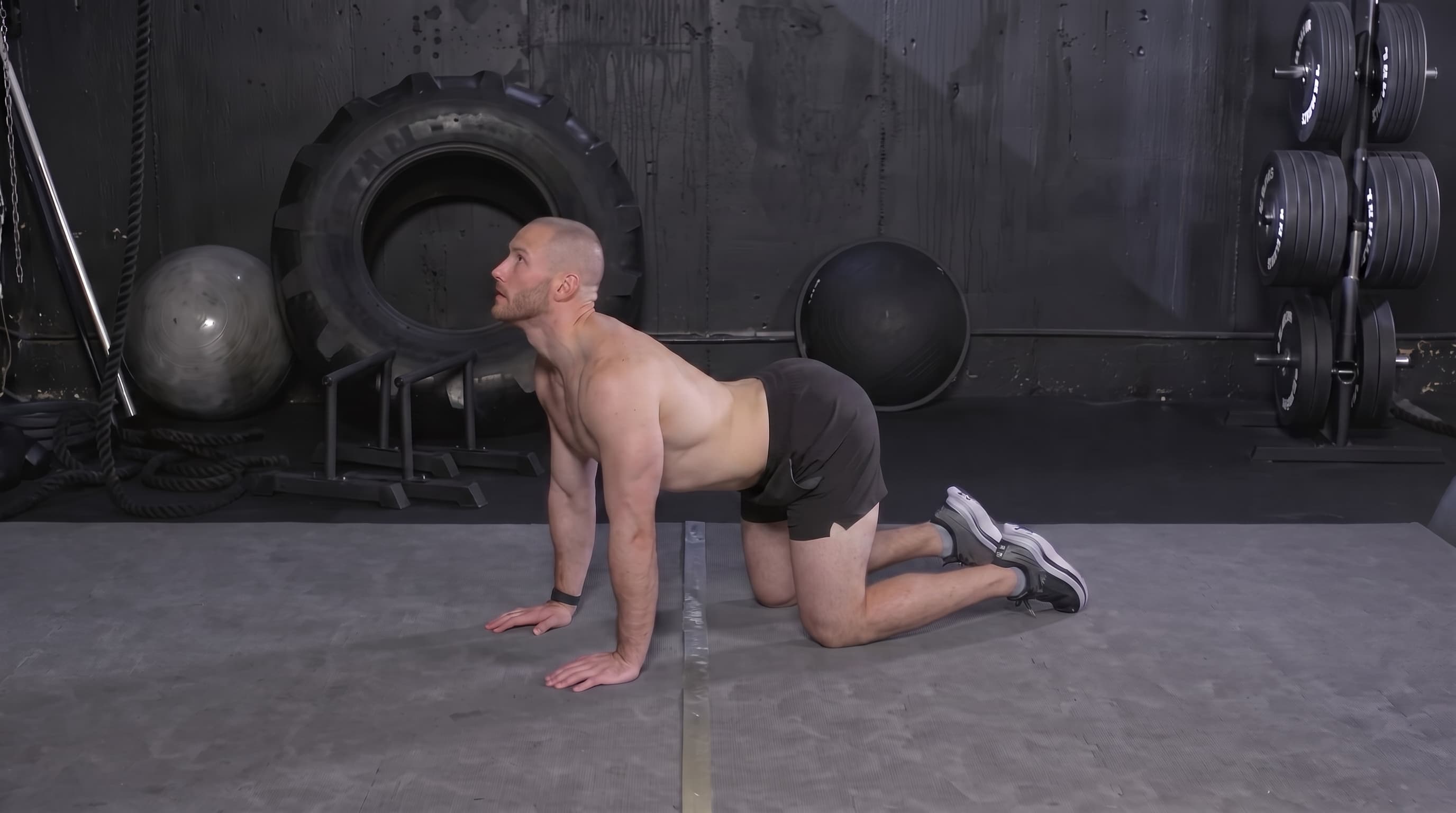
THE CAT-COW GETS filed under yoga, and yoga gets filed under things to do when the real training is over. It's the move the instructor calls out while you're still fussing with the mat. It's the warmup you skip because it doesn't feel like anything. Forty seconds on your hands and knees, arching and rounding, no load, no numbers, no sweat — the easiest possible thing to dismiss on your way to the bar. Dismiss it, and you spend the rest of the session asking a stiff spine to do work it can't do.
Twenty-Four Joints, One Habit
Your spine is not a rod. Between your skull and your pelvis sit twenty-four movable vertebrae, each one built to contribute a small share of flexion, extension, and rotation. Stacked up, those small shares are what let you move.
Almost nobody uses them that way. Sit for most of a decade and the middle of your back — the thoracic segment, the twelve vertebrae your ribs attach to — gradually stops volunteering. The motion has to come from somewhere, so it gets borrowed: a little more from the lower back, a little more from the shoulders and neck. Nothing hurts. You just quietly become a person who bends at two places instead of twenty-four.
That's the deficit the cat-cow addresses, and it's why the move feels like nothing at first. You're not stretching a muscle. You're asking segments that have been outsourcing their job to do it themselves again.
A stiff spine doesn't feel stiff. It feels like a spine that bends somewhere else.
The Part Everyone Flinches At
Here's the sentence that makes lifters uncomfortable: the cat half of the cat-cow is deliberate, maximal spinal flexion. Round your back on purpose. As far as it goes.
Every cue you've absorbed in a gym says don't. Flat back. Neutral spine. Chest up. Those cues are correct — under load. A heavy bar on a rounded spine is a genuinely bad trade, and the coaching exists for good reason. But the warning got sanded down over the years into something broader and dumber: that flexion itself is the danger, that a rounded back is an injury waiting for a start date.
It isn't. Flexion is a movement your spine is built to produce. What earns the caution is flexion plus load plus repetition. Take the load away and you're left with the movement your discs and joints want — the one that moves fluid, feeds cartilage, and reminds the segments they exist. On all fours with nothing in your hands, there is no bar to round under. That's the whole point of doing it there.
How to Do It
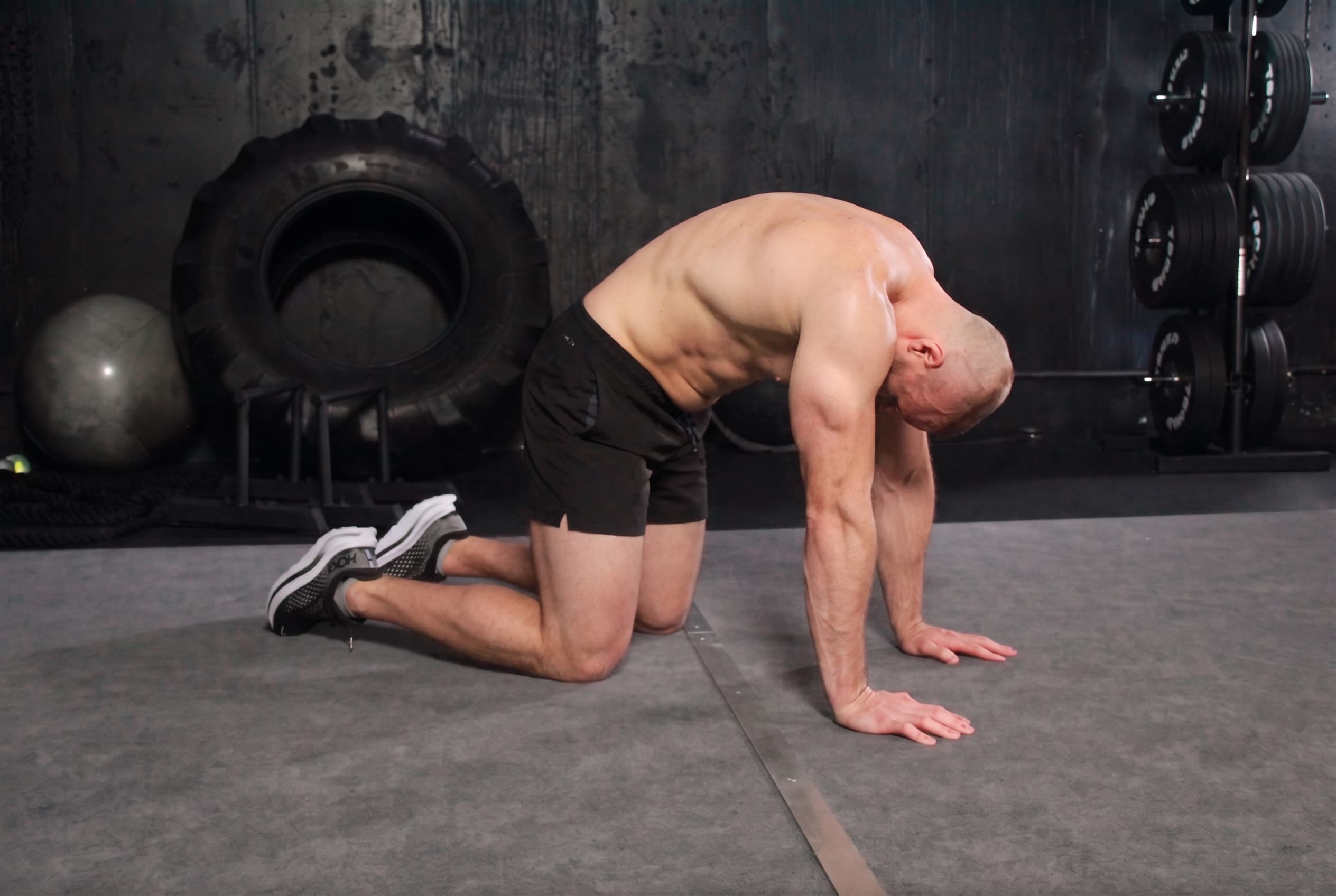
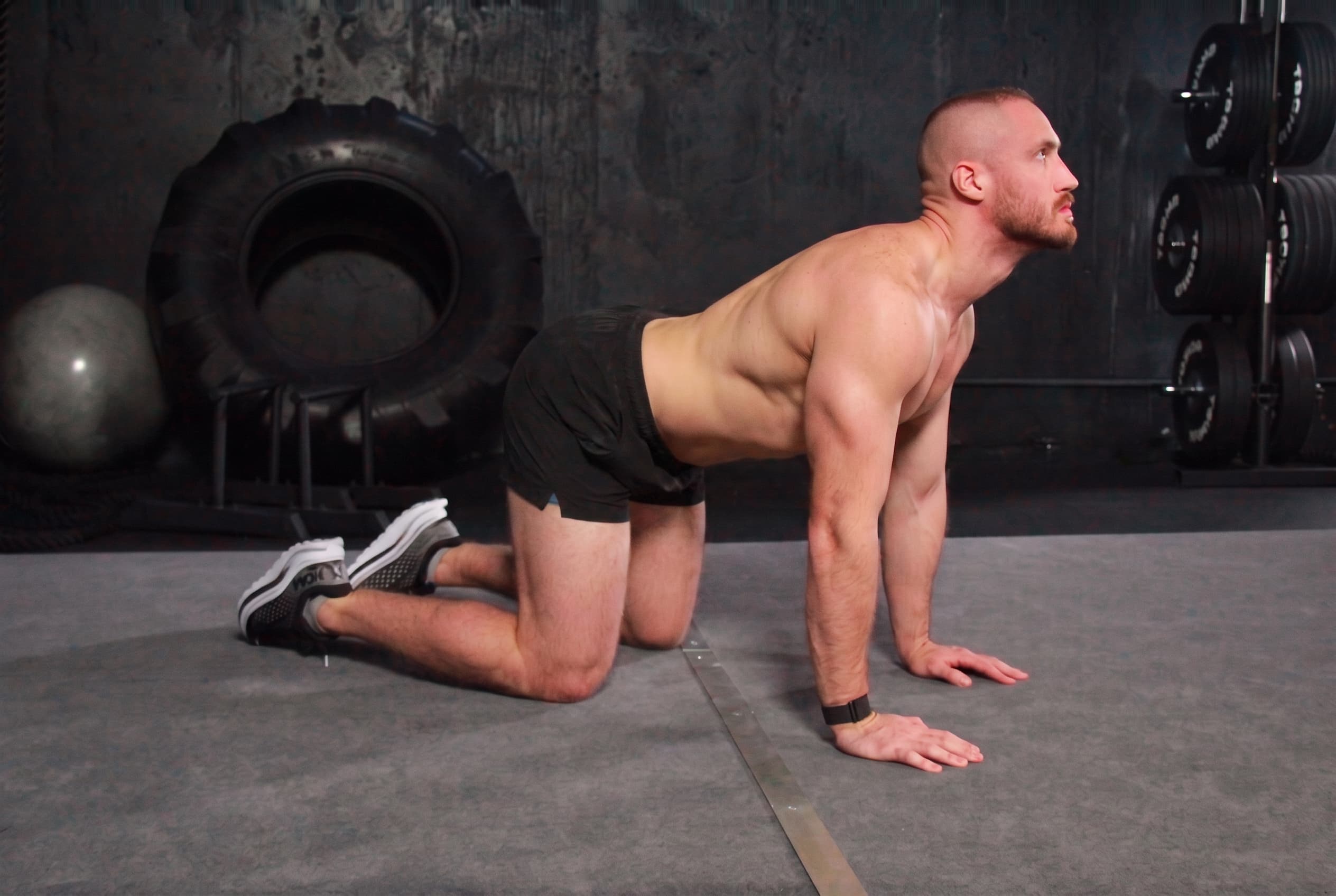
- Set up on all fours. Hands under shoulders, knees just outside hip width, shins flat.
- Cat: push the floor away and round your back as tall as it will go. Tuck your tailbone under, drop your head between your arms, and — this is the part people miss — spread your shoulder blades as wide apart as you can.
- Cow: reverse it slowly, two or three seconds. Tailbone up, belly down, chest and eyes forward, shoulder blades pinched hard together.
- Keep alternating. Two to three seconds in each direction, no pause, no bouncing.
The shoulder blades are half the exercise. Move only your spine and you get half the range and none of the upper-back benefit.
The Mistake That Wastes It
Speed. Almost always speed.
The cat-cow has no reps to chase and no weight to add, which leaves tempo as the only variable that matters — so of course it's the one people abandon first. Rushed, the movement becomes a wobble around the middle of your range: the easy inches, the ones you already own. The stiff end of the range, the part you actually came for, never gets visited.
Slow it down until you can feel the movement travelling. Tailbone, then lower back, then mid-back, then neck — and back the other way. If the whole thing arrives at once, you're moving your spine as one piece, which is precisely the habit you're here to break.
There's no weight to add and no reps to hit. Tempo is the only lever you have. Use it.
Where It Goes
There's no wrong time for it, which is rare in training. Before you lift, it makes the first working set feel less like negotiating. First thing in the morning, it's a faster way to feel human than coffee. Between sets of anything that loads your spine, it's free.
Program it by the clock, not by reps: forty seconds of continuous movement, twenty seconds off, three or four rounds. Two minutes of work, total. If you want a single honest measure of whether it's doing anything, notice how far into the set the movement keeps improving. Early on, round three feels better than round one. That gap closing is the adaptation.
None of this makes the cat-cow impressive. It won't ever be the part of the session you tell anyone about, and it will never feel like the hard thing you did that day. It's just the two minutes that decide whether the other fifty-eight are asking your spine for something it can still give.